← Home Archive Photos About Also on Micro.blog
  • Another YT video showing how expert programmers work: Aaron Hsu shows how he works with APL to develop the codfns compiler. There are so many tidbits about working style, the impact of code density on comprehension and the ability to make changes, and much more.

    β†’ 11:40 AM, Jul 31
  • Bridging the array programming language conceptual gap

    Array programming languages are so strange if you’re used to more traditional programming schools (procedural, object-oriented, or functional). Aaron Hsu is both a well-known professional APL programmer and a researcher into programming language education, and he helps cross the barrier with this great talk he co-presented with Dhaval Dalal and Morten Kromberg at 2018’s FnConf. It’s a long watch, almost 90 minutes, but the key bridging of concepts is presented in the first few minutes. I’ll try to reproduce it in text below, mainly for my own benefit.

    Functional programming languages use abstract data types, first-class functions, and abstractions built on the composition of those parts, whereas array programming types use the array data type, a rich set of language primitives, and directness rather than abstraction (so you’ll resist abstraction in favour of direct composition of arrays and the rich set of array manipulation tools given to you).

    It’s hard to over-emphasise what “rich” above means. Long-standing programmers might argue that Ruby has a rich standard library, for example, and it does compared to something like C. But APL and it’s ilk give you primitives as powerful as those what Numpy or Pandas give Python programmers for data manipulation, but as built-in primitives rather than the parallel world you often have to use Numpy/Pandas code in (i.e. you’ve to use the data types Numpy gives you, not Python’s native data structures).

    The talk goes over it so much better than I’m trying to express here πŸ˜…. You can compare implementations between programming schools (using javascript, haskell, and scala on the one hand, and APL on the other) in the repo that accompanies the talk.

    β†’ 9:24 AM, Jul 29
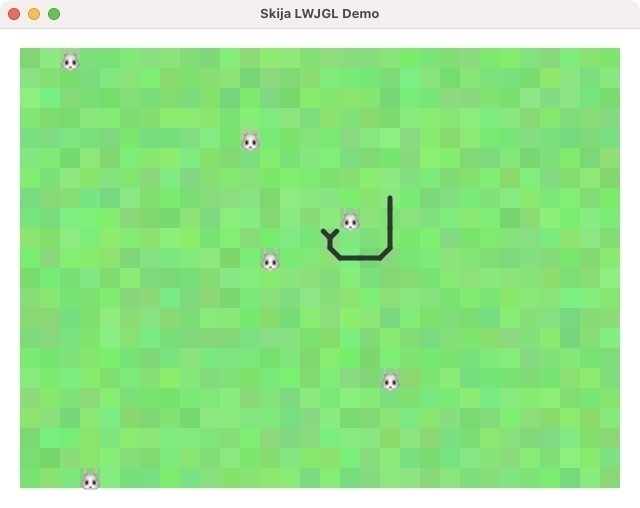
  • Nikita Prokopov uploaded a coding session video where he codes a version of Snake using Clojure and Skija in about 3 hours. You pick up so much incidental stuff watching experienced programmers work like this! (It’s long, but totally watchable at 1.5x speed). Here’s the code.

    β†’ 4:12 PM, Jul 27
  • Drawing libraries I have known and... well, not always loved

    There are two main schools of javascript drawing APIs: those that let you paint shapes onto a canvas that are merged into a single image (normally targeting a web canvas or similar surface), and those that remember the individual shapes and let you interact with them after they’re drawn (normally targeting surfaces like SVG, or perhaps WebGL). Generally speaking they follow what the drawing surface they target supports, though in some cases you will find libraries that try to extend one target with the capabilities of the other.

    The library I’ve probably used most extensively is Mike Bostock’s D3.js, the data visualisation lib that targets SVG, though it has support for canvas as well. It was a key component of the GetBulb startup I worked on for a few years. It’s a great library: mature, full-featured, and easily composable with other libraries (like React). It was developed while Mike worked as part of the NYTimes’s data visualisation team, so you’ve probably seen it in action on some of their excellent data visualisation reports.

    Recently some users have complained that it’s been too oriented towards Observable, Mike Bostock’s live visualisation editor/platform hybrid. But the previous versions are still available, and the latter complaints smack of overly self-interested users with their own expectations but no desire to pitch in on a fork that scratches their particular itch.

    I’ve also used Processing, mainly via its Clojure wrapper, Quil. It’s also very full-featured and mature. It has an online analogue, p5.js, that you can use instead of the original java-hosted version, that seems to largely have parity with the original. I wrapped some processing examples from the Generative Design book using Quil a few years ago. There’s a newer version of the Generative Design book for p5.js which I’ve still to dig into but looks every bit as good as the first. The companion machine learning library, ml5, is also worth checking out.

    Other libraries that I’ve used, though not as extensively as Processing or D3 include:

    • thi.ng is extraordinary. Karsten Schmidt is a phenomenally productive coder and visualisation artist. He’s written far more lines of Clojure & Clojurescript than I could ever hope too as part of his data visualisation libraries - and then for good measure ported them all to Typescript while still expanding their functionality. They’re a bit harder to get into due to their breadth and the docs assuming a higher level of competence than a typical introductory guide. But the scope and quality of these libraries is breath-taking. A magnum opus. I attended one of his workshops in London about 5 years ago and I recommend them whole-heartedly to anyone.
    • Pts, which I really like, largely because of its rational attempt to organise its API around “abstractions of Space, Form, and Point”. Space is equivalent to a drawing surface, Form to a pen or other means of making marks, and Point to the data representation of your visual idea. The documentation is excellent too. William Ngan, it’s author, has a good Medium blog as well.
    • Two, a “two-dimensional drawing api geared towards modern web browsers”. It can target any of SVG, Canvas or WebGL, and comes with a scenegraph and animation loop. I need to trial it properly. The name is either a reference to three.js or a nice case of simultaneous invention by two separate authors.
    • Three, a low-complexity, lightweight 3D engine. It usually targets WebGL but it can also work with Canvas or SVG. It’s another large piece of code to navigate but their fundamentals series gets you up and running quickly. Courtesy of Mr Doob - check out his homepage, currently it’s a fun multi-user sketch pad.
    • Skija which I’ve mentioned in passing before - looks like a great target for lower-level drawing access than what Processing offers. Also focused on the JVM, built on the Skia, the cross-platform 2D drawing library. Unlike most of the others this one can’t target web-hosted drawing surfaces, though maybe you could get part of the way there with Emscripten, Skia & the Canvas API?

    That’s not even a complete list πŸ˜… but this is turning into quite the library zoo. There’s some tantalising examples of generative design using J, the array programming language, which I’ve not had time to dig into too closely, and I’ve not even mentioned where I first started getting into this kind of stuff - back when I was a teenager and one half of the demoscene Mesmery team on the 8 bit Commodore 64. Hilariously that might’ve been when I got the most stuff done - there wasn’t quite the paralysis of choice the above list hints at…

    β†’ 6:45 PM, Jul 24
  • I’ve been looking at a lot of generative art libraries. Tyler Hobbs has done some amazing stuff with genartlib (which wraps Quil which itself wraps Processing, the original democratising force here). But Tyler’s stuff in particular I love.

    β†’ 11:12 AM, Jul 24
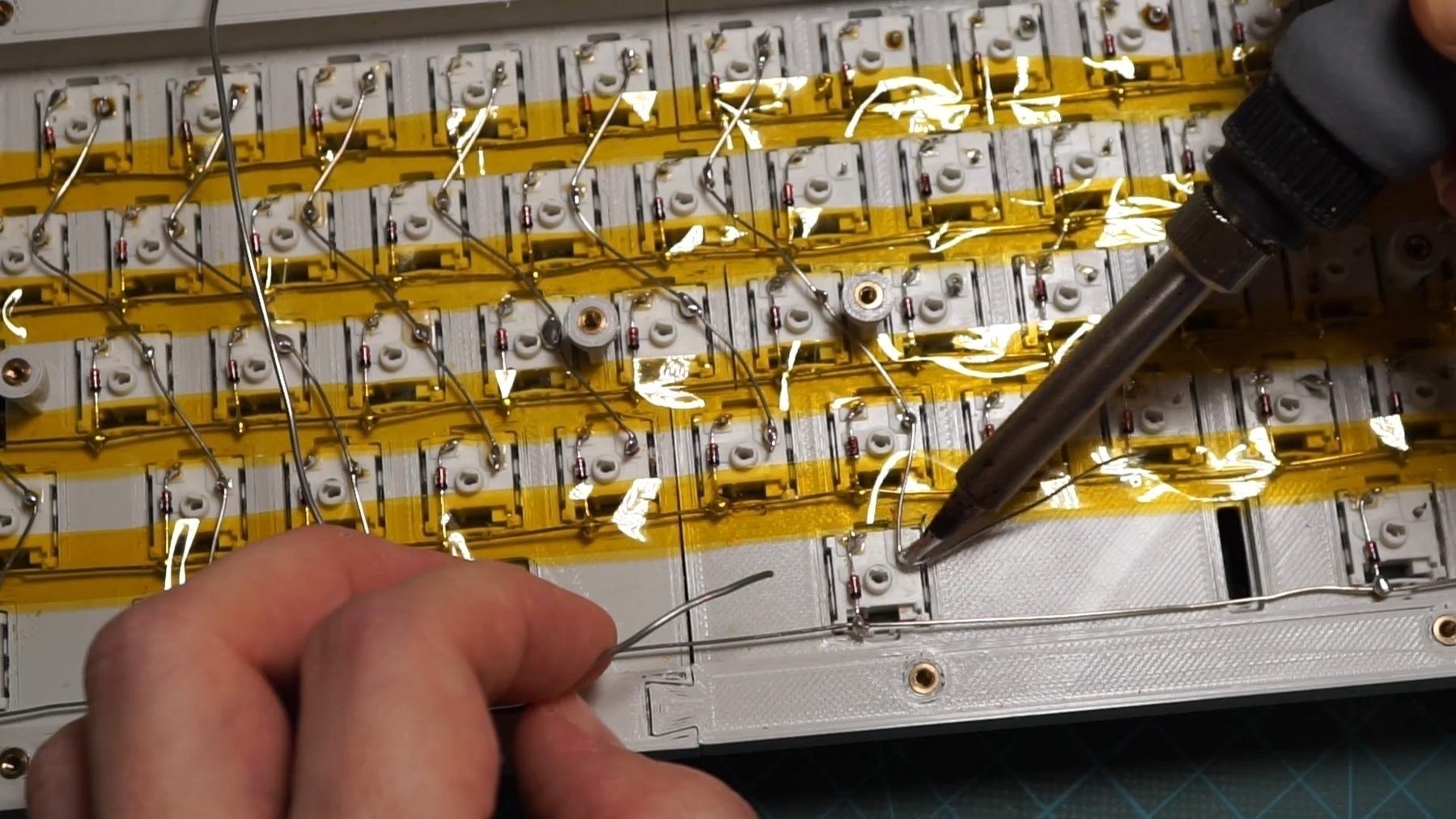
  • Matt3o, famed keycaps designer and keyboard maker, has a guide on how to make your own keyboard, including hand-wiring (so no need for a PCB).

    β†’ 8:29 PM, Jul 23
  • Visual noise generation is generally done using Perlin noise, but its creator, Ken Perlin, went on to develop Simplex noise which Keith Peters finds far better. It’d be fun to play with this in some design work (and check out that post’s mini-app for fun comparisons).

    β†’ 10:54 AM, Jul 19
  • So I’m largely capturing my current set of open web tabs as kottke-style brief links - apologies if you’re not a technical person. I promise these posts aren’t being written by some poorly-tuned AI.

    β†’ 11:41 AM, Jul 18
  • I still want to make my own keyboard: split, ortholinear, but with judicious use of 1.5 & bigger keycaps and, most importantly, wireless, which seems very rare for split keyboards. It makes sense - you’ve to double up on batteries & more. Maybe the TinyPico could do it?

    β†’ 11:38 AM, Jul 18
  • I’m not sure “coffee-grinders” is a good name for the request-handling pattern Arne describes, where multiple functions handle & alter a request in sequence. But I far prefer to Ring-style nested functions (and it’s why I prefer Pedestal to Ring as a web handler framework).

    β†’ 6:24 PM, Jul 17
  • Harold shows some lovely generative designs using nodes & skija over on Instagram.

    β†’ 5:12 PM, Jul 17
  • Are you starting to go back to shared working arrangements? I’ve worked remotely for years but if you are, monk traditions can help you prepare.

    β†’ 5:05 PM, Jul 17
  • Array Programming Languages

    I’ve been fascinated by languages like APL, J and BQN, and the succint expression of dense computation they allow.

    Sure, I’ve always been fascinated by programming languages. But one constant bugbear has been just how much code it takes to express any significant computation. Array languages offer a set of primitives that operate and compose on much richer data sets (n-dimensional arrays) than the default in other languages, at the cost of looking quite… dissimilar to what programmers normally expect to see, code-wise.

    I genuinely love that APL stands for “A Programming Language”. Iverson’s Notation as a Tool of Thought is eye-opening in its promise, no less so today then when it was written. BQN seems to be the best-available modern open-source implementation, but its documentation is still lacking, especially for programmers new to APL-derived languages. So I thought I’d start with J, especially as it doesn’t need the symbol set APL requires, and it has some interesting means of combining operators (hooks and forks) that looked fun to play with too. There’s also ngn/k, an open-source implementation of K that has an online playground if you just want to jump in and be bewildered.

    That means that my total experience writing APL-style code to date amounts to some tentative J written while following their tutorial. I’ll publish some notes on the experience when I’ve completed it. It’s been fun so far, but not without its own warts & cruft. Host OS interactions look, well, absurd. But I’m still the neophyte here, so it’s their party.

    β†’ 3:59 PM, Jul 17
  • Trying to resurrect my activity here after turtling down through the latest series of lockdowns in Dublin. Just had my second vaccine and starting to feel some normalcy may slowly be returning, despite the D variant’s best efforts🀞

    β†’ 3:33 PM, Jul 17
  • RSS
  • JSON Feed
  • Micro.blog